
The 100-Book Milestone Explorer Log: Track, Rate, and Celebrate Your Child’s First 100 Books
A vibrant, illustrated printable book tracker that turns every completed story into a proud badge of honor. Built for rereads, graphic novels, audiobooks, and bedtime favorites.
What is The 100-Book Milestone Explorer Log?
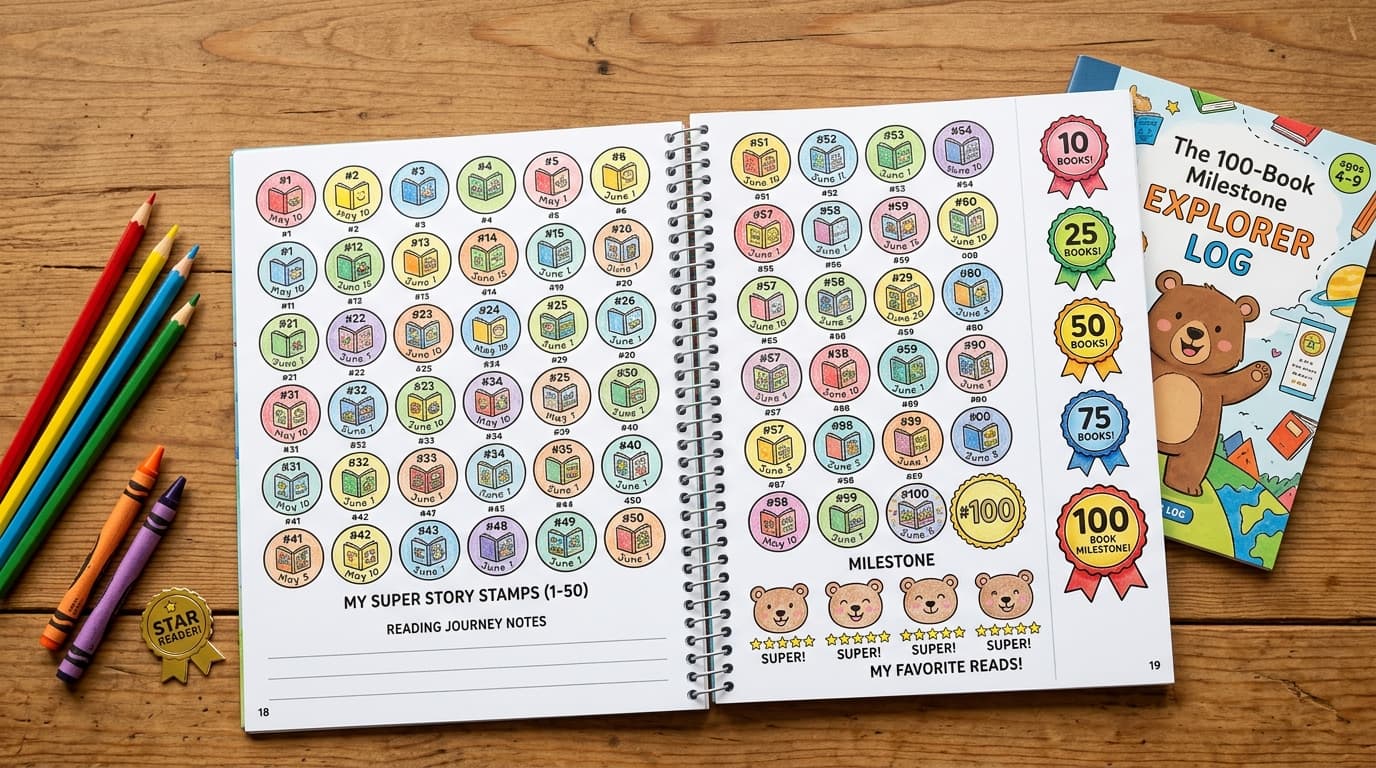
The 100-Book Milestone Explorer Log is a free, evidence-based printable reading journal designed for children ages 4 to 9. Instead of using rigid school reading timers that turn reading into a chore, it uses gamified visual rewards—including 100 color-in story passport stamps, a 5-star smiling bear rating scale, creative quote bubbles, and milestone badges at 10, 25, 50, 75, and 100 books—to build intrinsic reading motivation, reading comprehension, and daily family literacy habits.
Why Families & Educators Love This 100-Book Tracker
Traditional school reading logs often feel like homework, focusing on minutes on a clock rather than the magic inside the pages. We designed The 100-Book Milestone Explorer Log around positive reinforcement and child-led discovery.
100 Numbered Passport Stamps
Visual progress tracking provides an immediate dopamine boost for young minds. Every time your child finishes a story, they color in a numbered passport stamp on their master map.
5-Star Smiling Bear Rating Scale
Children ages 4–9 love sharing their opinions. Our playful bear rating scale empowers kids to evaluate plot, humor, and characters without needing advanced writing skills.
Funniest Quote Bubbles
Capturing a hilarious line or memorable phrase strengthens phonological awareness, vocabulary retention, and active listening skills during shared read-alouds.
5 Milestone Checkpoint Badges
Reaching 100 books is a big goal! Breaking the journey into celebratory checkpoints at 10, 25, 50, 75, and 100 books keeps reluctant and emergent readers motivated throughout.
Sample After-Story Questions Inside the Log
Dialogic reading—having a back-and-forth conversation with your child about a story—is proven to boost reading comprehension more than passive listening alone. Inside the log, every review page features playful prompts that spark dinner-table and bedtime conversations:
Pediatric Literacy Tip:Don't quiz your child like an exam! Let their silly answers lead the conversation. You will laugh together and build a priceless record of their childhood thoughts.
“Draw the funniest face from this book.”
Connects visual art to character emotion and story recall. Perfect for emergent pre-readers who communicate best through drawings and doodles.
“Rate this story: 1 to 5 sleeping bears!”
Builds critical thinking and personal reading identity. Kids learn that their opinion matters and that it's okay not to love every book equally.
“Which word was the coolest new word we learned?”
Expands expressive vocabulary through incidental learning. Parents scribe the word and craft a silly family sentence together.
“Would you recommend this book to your best friend? Why?”
Encourages perspective-taking, social-emotional awareness, and narrative summarizing without feeling like a classroom book report.
The Pediatric Science Behind the 100-Book Milestone
Why does tracking 100 books work so effectively for children between ages 4 and 9?
According to literacy research and pediatric guidelines from the American Academy of Pediatrics (AAP), shared and independent reading during early childhood builds critical neural pathways responsible for language acquisition, executive function, and emotional regulation.
“The single strongest predictor of long-term academic success is the volume of joyful, self-selected reading a child experiences—surpassing even socioeconomic factors.”
However, literacy experts caution that mandatory, timer-based reading logs can backfire if they feel like a test. Counting down minutes turns reading into a contractual chore, stripping away intrinsic pleasure.
How our Explorer Log solves the “Reading Log Burnout” problem:
Zero Timer Pressure
Whether a book takes 5 minutes at bedtime or 3 days of chapter reading, every book counts equally as 1 stamp. No stopwatches. No pressure.
<2 Books a Week = 100 a Year
Reading 100 books sounds massive, but at just 2 books per week, your child will read 104 books in a single year! Completely doable for any family.
All Formats & Rereads Count
In early literacy, repetition maps words to meaning. If your 4-year-old requests the same picture book 5 nights in a row, that earns 5 passport stamps! Graphic novels and audiobooks count too.
How to Use the Explorer Log by Age Group (Ages 4–9)
Tailored reading strategies designed to match your child's cognitive development stage.
How to Print & Assemble Your Explorer Log at Home
Get your child's personalized reading expedition ready in under 3 minutes.
Download the Free PDF
Click the download button on this page to save 100-book-milestone-explorer-log.pdf directly to your device.
Choose Your Paper
Standard US Letter or A4 works great. For the Cover, 100-Stamp Map, and Certificate, we recommend heavier cardstock (65 lb) so crayons won't bleed through.
Print Extra Review Pages
Pages 1–5 are your core milestone trackers. Pages 6–8 are modular Book Review & Activity Sheets—print as many copies as your child wants for their favorite stories!
Bind It Their Way
Hole-punch the pages into a colorful 3-ring binder, clip them onto a dedicated “Reading Explorer Clipboard” next to their bed, or staple them into a custom booklet.
About This Literacy Resource
Frequently Asked Questions
Everything you need to know about tracking, counting, and celebrating with the Explorer Log.
Start Your 100-Book Adventure Tonight
Download the complete printable PDF now. Free instant access—no email required, no subscriptions, and ready to print right from your home or classroom printer.